Datça Sailing Holiday: A Week Measured in Anchorages
Most holidays begin by choosing a destination and then choosing where to sleep. A sailing holiday reverses that order: the accommodation moves, and the view from the companionway is different every morning. On the water between Selimiye and Bozburun, along the southern shore of the Datça peninsula, that idea stops feeling exotic within about forty-eight hours. By the third morning most guests have quietly given up on checking the time.
A Datça sailing holiday is not a cruise, and it is not a hotel stay with a boat attached. It is a week in which the weather, the light and the shape of the coastline set the agenda, while a captain who knows the bays turns all of that into a plan you barely have to think about.
How a day unfolds on board
The rhythm settles fast, and it is simpler than life ashore.
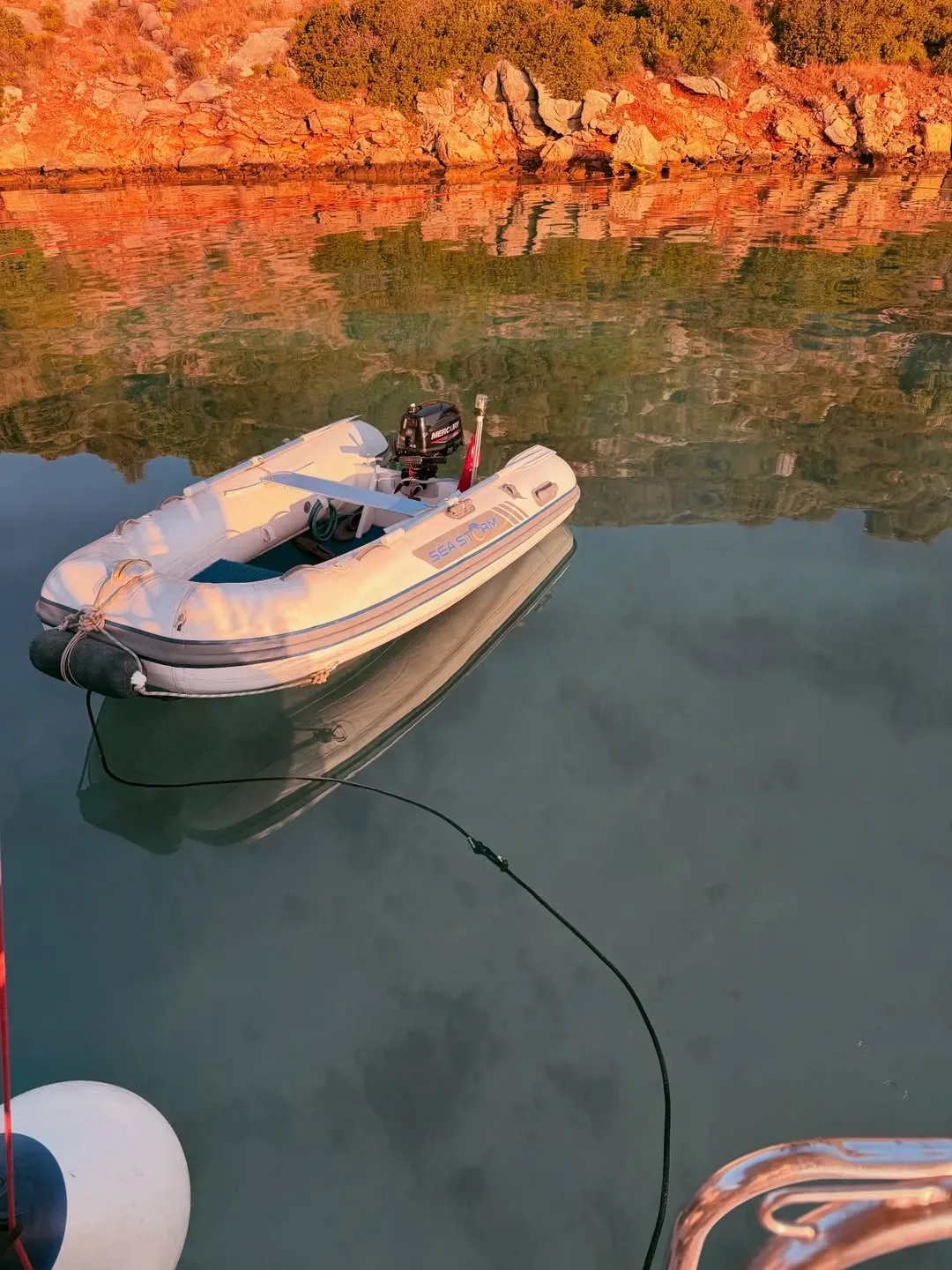
Mornings begin at anchor. Breakfast happens on deck while the water is still glassy — the hour before the day's breeze fills in is the calmest of the twenty-four. Mid-morning the anchor comes up and the boat moves on, usually a short hop rather than a long passage, because in Hisarönü Bay the anchorages sit close together.
Around midday the wind arrives. In the Aegean summer the prevailing breeze builds through late morning, holds through the afternoon and softens again towards evening. When it behaves, the engine goes off and the sails go up, and the difference is immediate: a sailing yacht under canvas makes almost no noise at all.
Afternoons belong to swimming, shade and a long lunch. By late afternoon the boat is heading for wherever it will spend the night — a bay chosen that morning, not three months earlier. Once the anchor is down the day simply stops. Day boats head back to harbour, the water flattens, and the bay empties out around you.
Who the format suits
This is not a holiday that works for everyone, and the honest version is more useful than the brochure version. It tends to suit:
- Couples who want distance from the crowded resort strips
- Families and close groups of friends who genuinely want the time together
- Swimmers and snorkellers, and anyone happiest with several hours a day in the water
- Travellers who care about the rhythm of a day rather than a list of attractions
It suits less well anyone who wants a different restaurant, bar and nightlife scene every evening, or the full facilities of a large resort. Some of these bays are quiet enough that the loudest thing you will hear all evening is the anchor chain.
How it differs from a week in a hotel
The first difference is privacy. On a private charter the yacht is yours: no lobby, no shared pool, no competition for a sunbed. The second is access. A good share of this coastline has no road to it at all, so the only way in is from the water — and those bays clear out completely once the day boats leave.
The third difference is scale, and it deserves stating plainly. Cabins are compact next to hotel rooms, fresh water is a resource you use thoughtfully, and stowage is limited. None of that is a flaw; it is simply how boats work. Life on board happens on deck, not below.
The yacht and the size of the group
Group size shapes the feel of a week more than any single feature of the boat. Captain Fargo runs three yachts:
- Filomuzdaki tekneleri ve güncel kapasitelerini Filo sayfasından görebilirsiniz.
The useful question is not how many people fit, but how the cabins divide. Four couples travelling together are far more comfortable on a four-cabin layout. A family or a group of close friends will often find three cabins entirely sufficient and prefer the extra saloon and deck space that comes with the trade.
The cruising ground
Captain Fargo departs from Orhaniye, inside Hisarönü Bay in the Marmaris district of Muğla. The route runs between Selimiye and Bozburun and takes in the twenty-one bays and islands of the bay itself. Because the shores lie close to one another the passages are short, which is exactly what you want: the day is spent in the anchorages rather than getting to them. To the north the land rises towards the Datça peninsula, pine slopes running down to the water and small inlets folded into the coast.
Packing for life on deck
- A soft holdall rather than a hard suitcase — one folds away, the other does not
- Deck shoes with pale, non-marking soles
- A light layer for the evening; Aegean nights cool down more than first-timers expect
- High-factor sun cream, a hat and sunglasses
- Any regular medication in sufficient quantity, since shore facilities in the quiet bays are minimal
FAQ
Do I need sailing experience for a Datça sailing holiday?
No. On a captained charter the yacht is run by a professional skipper and no certificate is asked of guests. If you want to take the helm or learn to trim a sail you are welcome to. If you would rather do nothing at all for a week, that is equally fine.
Is it suitable for families with children?
Yes, with a little planning. Confirm that correctly sized lifejackets are on board, set the length of the passages around the children rather than the other way round, and agree the basic deck rules on the first morning.
How many nights should I plan?
Three nights is the minimum with Captain Fargo and it works. Five or more is noticeably more relaxed, because the first day is arrival and the last is winding down — everything between them is the actual holiday. Bookings of five nights or more receive a 10% discount.
Sail with Captain Fargo
Captain Fargo offers captained private sailing charters from Orhaniye in Hisarönü Bay. The yacht is yours alone: no shared cabins, no other group on board. Rates start from €500 per night, and that figure is per boat, not per person. The minimum stay is three nights, with 10% off for five nights or more.
You can see all three yachts with their capacities and cabin layouts on the fleet page, and talk through dates and route on the contact page.