Datça Boat Charter: Exploring the Peninsula by Sea
Plenty of travellers get to know the Datça Peninsula by road, then see it again from the water and barely recognise it. Almond and olive terraces spill down the slopes, the coastline folds into bay after bay that no road reaches, and the colour of the sea shifts within a few boat lengths as the bottom rises and falls away again. A Datça boat charter makes sense for exactly that reason: it puts you in anchorages that only exist for people arriving by sea, it lets you wake up somewhere different each morning, and it lets the wind rather than a timetable shape the day.
Reading the peninsula from the water
The Datça Peninsula is a long, narrow arm of land separating the Gulf of Gökova to the north from Hisarönü Bay to the south. The two sides behave very differently. The northern shore is open and faces the prevailing summer breeze; the southern shore is deeply indented and, for most of the season, far better sheltered. Around Bencik, at the waist of the peninsula, the strip of land between the two seas narrows to a surprisingly thin ribbon.
Follow the northern shore of Hisarönü Bay westwards and you are in fact cruising the southern coast of the Datça Peninsula. Captain Fargo sails from Orhaniye, inside that same bay, so routes heading towards Datça are a natural continuation of the cruising ground rather than a long delivery passage tacked onto your holiday.
Bays worth building a route around
- Bencik — a deep, quiet inlet at the narrowest point of the peninsula, well protected and ringed by low maquis.
- Around Kuruca Bükü — close to the coastal settlements and convenient for a midday stop with a swim before lunch.
- Palamutbükü, Ovabükü and Hayıtbükü — a run of bays along the south-west of the peninsula, known for pebble beaches and unusually clear water.
- Knidos — at the far western tip, where the ruins of the ancient city sit between two natural harbours.
Treat these names as a palette rather than a fixed itinerary. Which bay you actually anchor in depends on the wind that day, the direction of the swell and your skipper's read of conditions from the morning onward.
Choosing the right boat
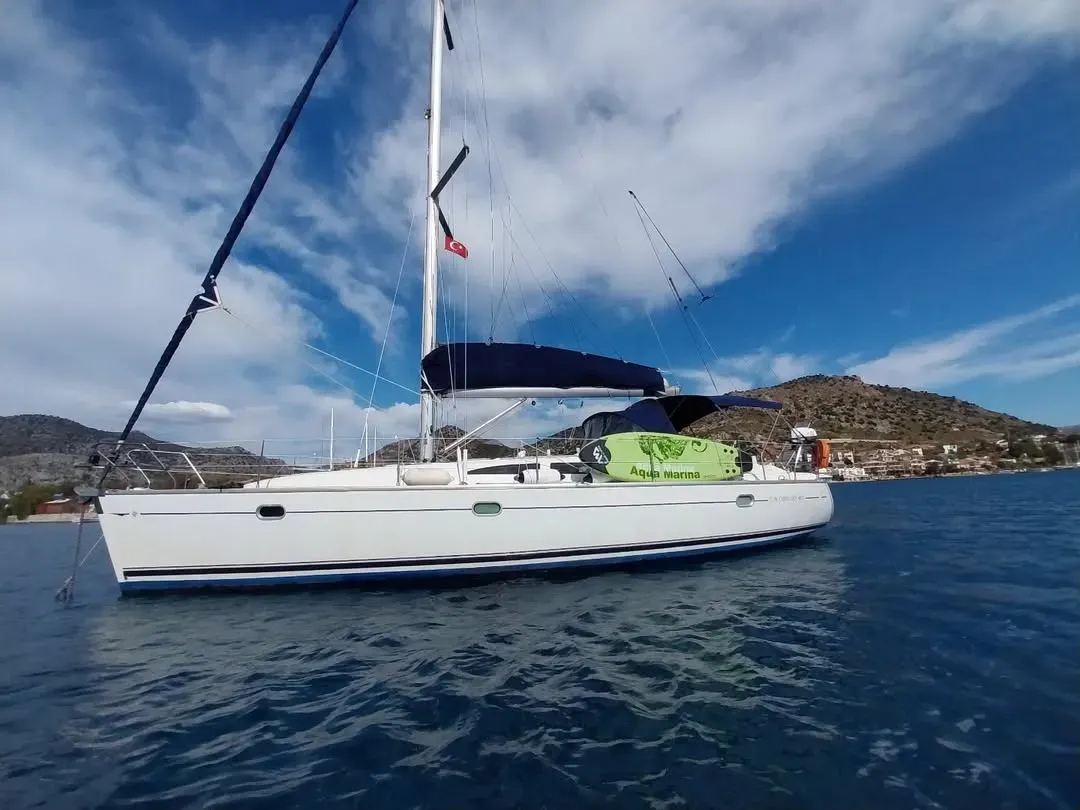
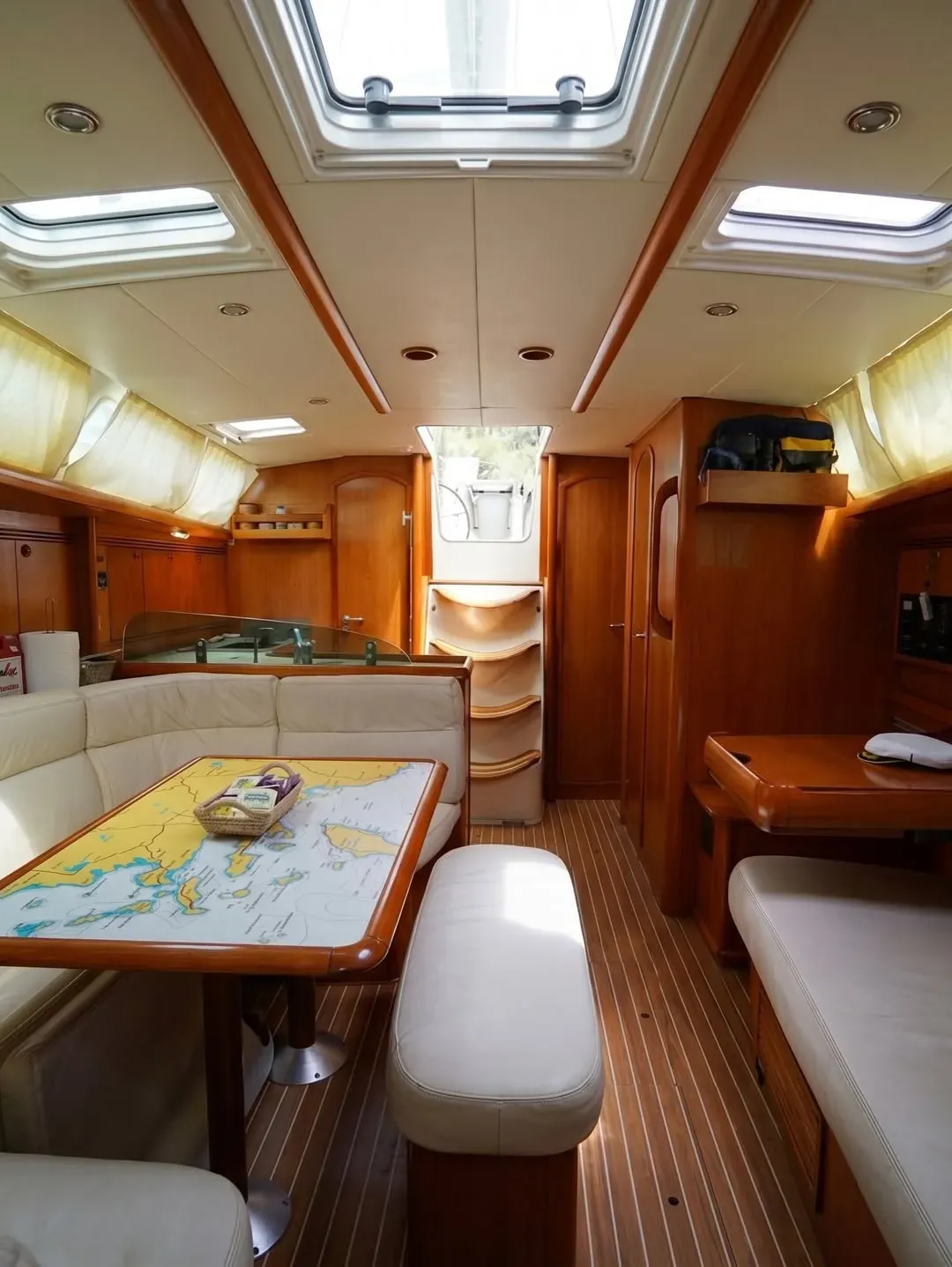
The first question is how many guests are travelling; the second, and more revealing one, is how those guests are distributed between cabins. Two boats carrying the same number of people can feel completely different if one has an extra cabin. Filomuzdaki tekneleri ve güncel kapasitelerini Filo sayfasından görebilirsiniz. If two couples, or a large family with teenagers, need their own doors to close, cabin count decides the trip.
The other argument for a sailing yacht is silence. In a decent breeze the engine goes off and all that remains is water along the hull, which is a difference you feel most strongly in the evening at anchor.
Wind, season and the rhythm of the day
The dominant summer wind along this coast is the sea breeze, and it usually builds through the afternoon. Experienced skippers therefore plan longer passages for the morning and keep the afternoon for swimming and lying at anchor in a sheltered bay. Most Datça boat charter itineraries are shaped around that one fact. Late spring, and again September into October, gives you thinner crowds, water that is still comfortable and popular anchorages that feel almost private.
Season also changes the character of the route. At the height of summer the best-known bays get busy in daylight hours; at the shoulders of the season the same places can feel like they belong to nobody. If your dates are flexible, say so when you enquire — it genuinely affects what can be planned.
Packing for a boat, not a hotel
Storage on board is limited, so a soft holdall that folds flat beats a hard suitcase every time. Non-slip shoes, a wide-brimmed hat, high-factor sun cream and one light layer for the evening are the items guests reach for most. Aegean summer evenings can be cooler than visitors expect, and that light jumper is the single most commonly forgotten thing on a first sailing holiday.
Five questions to ask before you book
Before you commit to a Datça boat charter, five short questions tell you almost everything about an offer:
- How many guests and how many cabins does the boat have?
- Is the price quoted per boat or per person?
- What is the minimum number of nights?
- Are fuel, harbour fees and provisioning included?
- Is the route fixed, or can it flex with the weather?
These five turn very different-looking offers into something you can actually compare. The per-boat versus per-person distinction in particular can move two apparently similar prices a long way apart.
FAQ
Do I need sailing experience for a Datça boat charter?
Not with a skippered charter. No licence and no previous experience are required; the skipper runs the boat and you plan the shape of the day together with them.
Can the route be fixed in advance?
A general framework is agreed at the start, but at sea the weather has the final word. A good plan is a flexible one that already includes alternative anchorages.
How many nights make sense?
Seeing this coast without hurrying takes more than a couple of days. The minimum stay at Captain Fargo is 3 nights, and bookings of 5 nights or more receive a 10% discount.
Sail the Datça coast with Captain Fargo
Captain Fargo offers skippered private sailing charters departing from Orhaniye, in Hisarönü Bay near Marmaris. On routes covering Göcek, Marmaris and the twenty-one bays and islands of Hisarönü Bay, the boat is yours alone — no shared cabins, no other groups on board. Priced per boat per night; that figure is per boat, not per person. Minimum stay is 3 nights, fuel is not included and there are no hidden charges.
You can compare the three yachts and their cabin layouts on our fleet page, and check dates or discuss a route through the contact page.